
Bridging the employment gap for people with deafblindness

Deafblindness presents unique challenges, and at Deafblind UK we’re committed to addressing them by raising awareness, improving accessibility, and providing tailored support. In this blog, we take a closer look at how we can bridge the employment gap for people with deafblindness.
Understanding Dual Sensory Loss
Deafblindness, also known as dual sensory loss, is a combined loss of sight and hearing that affects communication, mobility, and access to information. In today’s workforce, employers are often reluctant to hire deafblind people. Some may hold outright stigmatising views about people with disabilities, others may be well-intentioned but still not doing enough to ensure they are equal access employers. They may feel they don’t have the right support systems in place, worry about the training, technology and adjustments that might be required, or simply lack awareness and confidence in how to accommodate someone’s needs.
Barriers in the workplace
Unfortunately, misconceptions and stigmatising beliefs around disabled employee’s productivity or reliability are all-too common. Many of the people we support have mentioned that these barriers can feel even greater as they get older and face additional challenges around confidence and inclusion.
Employment support for people with dual sensory loss should be person-centred, flexible, and collaborative. Success depends as much on changing attitudes and workplace environments as it does on developing individual skills.
Lived Experience

William’s Perspective
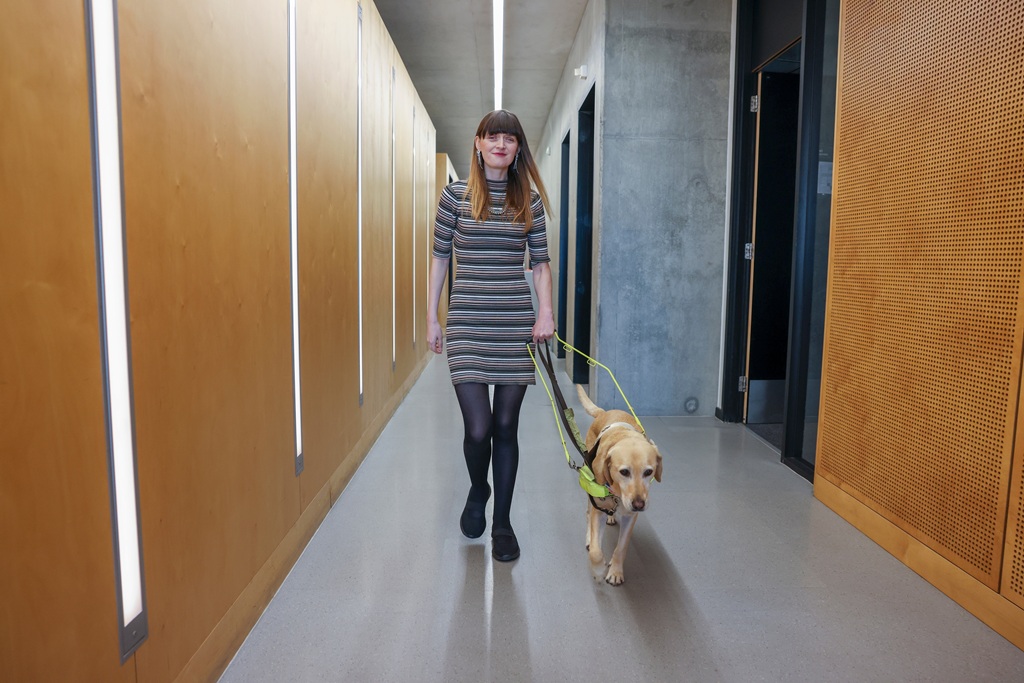
Our member William (pictured) shared some thoughts with us on how gaps in awareness and inclusivity can impact candidates.
“As someone with lived experience of being both deaf and partially blind, I know first-hand that the greatest barriers in employment are not my disabilities themselves, but the assumptions and lack of awareness that often surround them.
“While many organisations publicly promote inclusivity, the reality can still feel like a tick-box exercise rather than a genuine commitment to equity. Declaring multiple disabilities can be daunting when unconscious bias shapes how others perceive capability and responsibility.
“True inclusion requires ongoing self-awareness and systemic change not just policies or statements to ensure disabled people are not only welcomed into the workplace but empowered to progress and thrive.”
So, what needs to change, and how can employers help close the employment gap for the deafblind community?
In an ideal world, employers should review and improve their recruitment processes to ensure accessibility from the very beginning. This could include offering application materials in accessible formats, including flexible communication options during interviews, and involving disability employment specialists or interpreters when needed.
Over the years in the workplace reasonable adjustments have become the norm however it should be standard practice, not an afterthought. Employers can provide adaptive technology such as screen readers, magnifiers, tactile labelling, and vibrating alerts. Simple adjustments like better lighting, clear signage, and quieter workspaces can make a significant difference to individuals.
Our Employability Programme
To help close this gap, at Deafblind UK we have created an Employability Programme, specifically designed to support individuals who are looking for work. The programme focuses on providing tailored support, skills development, and confidence-building to prepare participants for meaningful, sustainable employment. Early participants have started receiving one-to-one mentoring and attending skills workshops. Initial feedback shows that participants feel more confident navigating job applications and understanding workplace accommodations. While it is in its early stages the programme represents a promising approach to bridging the employment gap for deafblind individuals, combining personalised support with employer education to create an inclusive pathway into work.
Moving Forward
True inclusion begins with deliberate awareness and forward thinking. By breaking down misconceptions, offering the right training, and embracing accessible practices, employers can open the door to an incredible pool of talent, experience, and resilience.
Together, we can help close the employment gap and ensure that people with dual sensory loss have every opportunity to succeed in meaningful, rewarding work.
Let’s keep in touch!
Join our mailing list and we will keep you up to date about our projects and opportunities to get involved with Deafblind UK.
More Articles
A lasting tribute to a determined lady
“We’re really grateful to Deafblind UK; they were so supportive when my mother, Mary, went into a care home. Now,…

Firewalker shares why he is crossing the coals for Deafblind UK
“Helping others doesn’t always require something extraordinary, sometimes just a little bravery, confidence and courage to step forward and do…

How to prepare for a job interview when you have dual sensory loss
Preparing for an interview can feel daunting. There are nerves, anxiety, deciding what to wear, remembering what to say, and…