
Deafblind Conference 2026 - Meet the speakers & full agenda
Our panel of world class speakers are ready to share their stories, experience, and insight into deafblindness.
In Touch: Exploring touch, tactility and deafblindness
Conference Agenda
09:30 - 09:35
Welcome Address
Nikki Morris, CEO, Deafblind UK
09:35 - 10:15
Beyond Sight and Sound: Mapping the Role of Touch in the WHO ICF Core Sets for Deafblindness
Speaker: Dr Walter Wittich
Touch plays a fundamental role in how people with deafblindness access information, communicate, move around and participate in everyday life. Yet traditional health and disability frameworks often focus on sight and hearing, overlooking the central role of touch.
This session introduces the World Health Organization’s International Classification of Functioning, Disability and Health (ICF) and explains how ICF Core Sets are developed to describe the lived experience of specific conditions. Drawing on the newly developed WHO ICF Core Sets for Deafblindness – created through collaboration with experts and people with lived experience from 53 countries – the presentation explores how touch is represented in the Comprehensive Core Set.
Key areas include tactile perception, haptic exploration, communication, environmental access and participation. By looking at deafblindness through the lens of touch, this session shows how tactile functioning supports autonomy, social connection, learning and inclusion. Participants will gain both a clear introduction to the ICF and practical insights into how the Core Sets can help us recognise and advocate for the central role of touch in Deafblind lives.
10:15 - 10:25 - Break
10:25 - 11:05
Exploring the sense of touch from a neuropsychological approach; addressing the Tactile Working Memory Scale
Speaker: Jude Nicholas, Clinical Neuropsychologist, Statped and Haukeland University Hospital
This session will give an overview on the neuropsychological approach that focuses from the sense of touch to tactile cognitions. Tactile cognition is the high-level mental process where the brain interprets, holds information and remembers information gathered through touch. Very often we are not aware of the importance of touch in our everyday life. Yet even the simplest of activities require a great deal of tactile processing. The sense of touch is highly relevant for interactions and communication in people with deafblindness. This session will also highlight the assessment and intervention strategies of tactile working memory, especially in people with deafblindness.
11:05 - 11:15 - Break
11:15 - 11:55
Establishing a tactile ecosystem - is it time for a tactile revolution?
Speaker: Steve Rose, Speech Pathologist and Deafblind Consultant
Touch has been treated as a secondary compensatory sense; a last resort, for too long. Designed to be felt, this session positions the tactile ecosystem as a clinical and educational priority. Drawing from experience supporting children born with deafblindness in developing tactile language and cognition, it integrates reflections on active exploration, environmental mapping, and embodied communication to describe a tactile-primary system for language, literacy, and human connection.
Using tactile self-reflection activities, we will explore how tactile strategies seek information, location, and connection. The session reframes tactile selectiveness and aversion not as compliance issues, but as active communicative expressions, emphasising the practitioner's role in providing positive tactile mediation and interaction.
This presentation invites participants to reflect on whether to welcome or question the role of technology in moderating human connection. Should we instead seek a tactile revolution—one where educators, therapists, and interventionists promote tactile interaction and language before resorting to alternatives?
The session concludes by focusing on three calls to action:
- Recognising the breadth of tactile literacy as an active cognitive process
- Promoting the tactile modality as linguistically robust
- Addressing the implementation gap to ensure tactile evaluation tools are embraced by practitioners and families.
Touch is not a last resort. What will you do to fuel the tactile revolution?
11:55 - 12:05 - Break
12:05 - 12:45
Designing Beyond Function: Aesthetic and Motivational Frameworks for Tactile Learning Materials
Speakers: Dr Namita Jacob Programme Director, Chetana Trust and Senior Regional Education Specialist, Perkins International
Teresa Anthony
This presentation explores the vital role of pleasure, motivation, and tactile design in creating learning materials, with a specific focus on supporting individuals with single and/or dual sensory loss. We examine how texture, form, and thoughtful aesthetic design can transform educational resources from purely functional accommodations into objects that spark curiosity, invite tactile exploration, and foster autonomous learning.
Situated within the Indian context, where access to trained facilitators, special educators, and specialised support services is often severely limited, this presentation argues that learning materials must do more than simply convey data. For learners navigating visual, auditory, or dual sensory challenges, these materials must embody the encouragement, clarity, and intuitive guidance that a human facilitator would otherwise provide.
By embedding joy, tactile legibility, and intrinsic motivation into the design process, educational resources can bridge critical accessibility gaps—empowering diverse learners to engage with the world independently and confidently.
12:45 - 13:15 - Lunch
13:15 - 13:55
Being in Touch: Lived Experience, Deafblindness and Inclusion in a Changing World
Lord Blunkett
Shaping Support: Sir Stephen Timms on the Timms review, PIP and Deafblind People
Sir Stephen Timms
13:55 - 14:05 - Break
14:05 - 14:45
Exploring Deafblindness: New Research and Emerging Insights from Birmingham City University
Speakers: Dr Peter Simcock, Associate Professor of Social Work, Birmingham City University
Dr Claire Manford, Research Assistant, Deafblind UK Centre
Jacky Smith, PhD scholar, Birmingham City University
Rukaiya Sabuwala, PhD scholar, Birmingham City University
During this session, colleagues from the Deafblind UK Centre for Education and Research at Birmingham City University will share new research and emerging insights, with a focus on how research can stay “in touch” with the realities of deafblind life and practice. Dr Peter Simcock will introduce the Centre and outline its work since last year’s Deafblind UK conference, including recent studies, dissemination events, the Centre’s launch and website, and how it connects with people nationally and internationally in the deafblind field.
Dr Claire Manford will explore how professionals understand and use touch in practice, and how this can be shaped into clear, ethical guidance.
Jacky Smith will offer an overview of her PhD, which is exploring how people who are congenitally deafblind can be supported to actively participate in their social care support.
Finally, Rukaiya Sabuwala will outline the focus of her PhD research, Deafblind Services Since 1928: Interpreting the Past to Inform the Future, tracing the development of deafblind services over nearly a century and identifying what this history can teach us about designing better support for the future.
14:45 - 14:55 - Break
14:55 - 15:35
Lived Experience and Research in Social-Haptic Communication and Vibrosensoric Perception
Speakers: Russ Palmer, International Music Therapist, Vibroacoustic Therapy Practitioner, and Postdoctoral Researcher
Dr Riitta Lahtinen, Postdoctoral Researcher
In this presentation, Social-Haptic Communication (SHC) users, researcher and developer Dr. Riitta Lahtinen and music therapist, Hon. Dr. Russ Palmer, share insights from more than 35 years of life together as a couple. For them, touch and kinesthetic perception—known as haptics—are not only communication tools but also an essential part of daily living, relationships, learning, and participation in society.
Drawing on both personal experiences and professional expertise, they demonstrate how SHC supports communication in everyday situations, family life, research, hobbies, and collaboration with interpreters. The presentation highlights the role of SHC in shared interests such as music and astronomy, illustrating how touch can convey information, emotions, experiences, and environmental awareness.
Russ will share his personal experiences and research on feeling music through vibrations, a phenomenon known as vibrosensoric perception.
Riitta will discuss the development and global spread of touch messages, known as haptices, over the past 30 years. During the last decade, the increasing use and development of haptices have led to the creation of haptice dictionaries, providing a shared vocabulary for communication through touch.
As with any language, effective SHC requires both senders and receivers to understand its structure and grammar. Participants will be introduced to the concept of haptemes — the smallest meaningful units of social-haptic communication — and learn how these combine to create rich and nuanced haptices.
As native users of Social-Haptic Communication, Riitta and Russ offer unique perspectives on the power of touch-based interaction. Through practical examples and lived experiences, they explore how SHC has enriched their lives, strengthened relationships, and contributed to the international development, practice, and research of SHC.
15:35 - 15:45 - Break
15:45 - 16:25
Panel Discussion - Exploring Tactile Communication Through Lived Experience
Speakers: Kelly Taylor, Lilias Liston and Louise Gough
Moderator: Jonathan Reid, Head of Research and Education, Deafblind UK
16:25 – 16:30 – Break
16:30 – 16:50
Touch, Trust, and Transformation: Reimagining Tactile Communication in Medicine
Speaker: Dr Alexandra Adams
In clinical environments, touch is one of our most fundamental tools. We use it to examine, to treat, to reassure, and to comfort. But when sight and sound are absent or diminished, how touch is delivered changes everything. It becomes the primary bridge between isolation and connection—or between comfort and distress.
In this powerful and perspective-shifting session, Dr. Alexandra Adams—the UK’s first Deafblind person to qualify as an NHS doctor—invites us to look at healthcare through an entirely different lens. Drawing on her unique dual perspective as both a clinician navigating fast-paced wards and a patient receiving care, Dr. Adams explores the profound impact of physical contact in medicine.
Delegates will journey into the sensory reality of high-pressure clinical settings, exploring how non-visual cues, proprioception, and intentional touch can transform patient experience and clinical practice.
Most importantly, the session draws a clear line between touch that confuses or disempowers, and touch that is informed, consensual, and deeply reassuring.
16:50 – 17:00
Closing Address
Robert Nolan OBE, Chair, Deafblind UK

Nikki Morris
Nikki joined us in January 2023, and brings a wealth of experience and expertise to Deafblind UK. She will oversee the existing services to people who are deafblind, and is also keen to get involved with some of our new initiatives – including a project to identify and support people with the early signs of sight and hearing loss, and the launch of our new school resources. Before joining the Deafblind UK team, Nikki was CEO of Age UK Camden where she developed a wide portfolio of outstanding specialist services including day services, care navigation, counselling, and digital inclusion. In 2022 she was awarded the British Empire Medal for services to Camden during the Covid-19 pandemic. Nikki is also a registered nurse and has led the national Cancer Forum at the Royal College of Nursing for many years. She has a long-standing interest in research and education and is a member of the NIHR Public Health Research Prioritization Committee.

Dr. Walter Wittich | Associate Professor, School of Optometry, Université de Montréal
Walter Wittich, an Associate Professor at the School of Optometry at the Université de Montréal in Quebec, Canada, is dedicated to researching the rehabilitation of older adults facing both vision and hearing difficulties. With a background in Psychology (Concordia University) and Neuroscience (PhD McGill University), he further specialized in audiology during a postdoctoral fellowship at the Université de Montréal.
Originally focused on age-related vision loss, Dr. Wittich now explores dual sensory impairment and acquired deafblindness, and how sensory difficulties interact with cognitive abilities. His research spans basic sensory science, medical aspects, psychosocial factors, and rehabilitation approaches to sensory loss. His most recent work focuses on global equity disparities and how they relate to sensory difficulties, as he represents Deafblind International on the World Health Organization’s Disability Health Equity Initiative.
He is the inaugural chair of the Deafblind International Research Network, the 2020 recipient of the Canadian Helen Keller Centre 10th Annual JT Award, and the 2025 recipient of Perkins’ Anne Sullivan Medal. He is a Fellow of both the American Academy of Optometry, and the Association for Research in Vision and Ophthalmology, and is Quebec’s first Certified Low Vision Therapist.

Jude Nichols | Clinical Neuropsychologist, Statped and Haukeland University Hospital
Dr. Jude Nicholas is a certified clinical neuropsychologist, and a researcher employed at the center for deafblindness, University Hospital of North Norway and at the department of occupational neurology at Haukeland University Hospital in Bergen, Norway.
Dr. Nicholas is involved in the assessment and management of neurological illness and injury related to the workplace. He has some 30 years of clinical and research experience working with children and adults with various sensory loss. During his professional carrier he has delivered staff training at distinct levels for university degree courses, for parent groups, and for various professional groups of deafblindness throughout the Nordic countries and internationally. He has a longstanding interest in toxic conditions, genetic syndromes, and neurological conditions involving sensory impairments. He is the author of many articles and book chapters on these topics, including a chapter in the book on CHARGE syndrome and is the main author of the Tactile Working Memory Scale. His research investigates cognitions in Cerebral Visual Impairment, Auditory Processing Disorders, as well as tactile cognitions and the pragmatic understanding of how the tactile system functions, particularly in people with deafblindness. Currently he is investigating the combination of brain based auditory and visual processing impairment in children with complex auditory and visual difficulties and deafblindness. In 2022, he received the distinguished service award for significant contribution to the field of deafblindness, from Deafblind International.

Steve Rose MSc. | Speech Pathologist and Deafblind Consultant
Steve Rose (MSc.) is a speech pathologist, deafblind consultant, advocate and ally, with experience supporting people with deafblindness, or complex disabilities. Based in Melbourne, Australia, he provides person-centred therapy and specialised training using remote and in-person supports. His interests focus on early intervention, use of video analysis and development of bodily-tactile communication, tactile language and tactile cognition.

Dr Namita Jacob | Programme Director, Chetana Trust and Senior Regional Education Specialist, Perkins International
Dr. Namita Jacob is Director, Chetana Trust, Chennai. The organization develops and shares locally relevant solutions to issues in child development, disability, health and inclusion. It works in close partnership with people who are visually impaired, deaf and deafblind and those who support them.
Early in her career, Dr. Jacob lived and worked with a group of deafblind students. The intense connection and learning was to influence her work through the rest of her life. A major activity of the trust is to work alongside a group of adults who are deafblind to develop their capacity to support themselves, their families and each other. Chetana Trust is a knowledge partner to the Society for the Empowerment of the Deaf-Blind, a unique organization for deafblind adults run by deafblind adults. Dr Jacob received the Beroz Vacha Memorial Award, given by the deafblind community in India, recognizing outstanding individuals who recognize the potential of people who are deafblind and work tirelessly to enable them.

Teresa Anthony | Inclusive Design Lead, Chetana Trust
Teresa Antony is the Lead:Inclusive Design at Chetana Trust. Her work ranges from developing and organising awareness workshops for adults and children, training programs for professional, accessible play and reading events and activities for children and managing the complex elements of running accessible library services for the children of Chennai.
Her great passion is creating accessible children’s story books. Her background in Visual Arts and Design, combined with her training on designing access solutions using a range of technology and learning scripts such as braille, pushed her to innovate and create internationally awarded inclusive story books.
For the past 9 years, Teresa has worked alongside children and adults with and without disabilities to spread awareness on the importance of accessible imagery that children's stories should hold. She mentors individuals wanting to explore, create or use accessible story books.
A recipient of both National and International awards, Teresa continues to come up with innovative new solutions so that learning and creation are available to all.
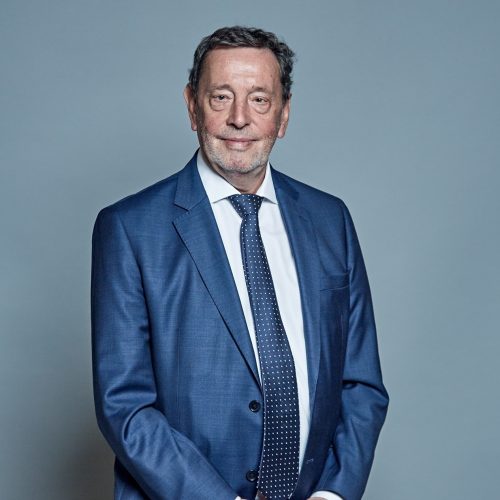
Lord David Blunkett | Member, House of Lords
David Blunkett is a UK politician, who moved from being the leader of England’s fourth largest city (Sheffield) to become the Member of Parliament for Sheffield Brightside in 1997. Having served in the Shadow Cabinet under the Labour leadership of John Smith and Tony Blair, he joined the incoming government in 1997, and served for 8 years in Tony Blair’s Cabinet. He held the posts of Education and Employment Secretary, Home Secretary and Secretary of State for Work and Pensions.
After leaving government, David worked with a number of key charities, as well as advising on issues as diverse as cyber security, education and skills. As a former board member of the National Citizens Service Trust, he has had a long-standing interest in citizenship education and the wellbeing of young people. More recently, David led on the production of a major report on the future of education and skills for the Leader of the Opposition, Sir Keir Starmer. He has a number of advisory posts including being an adviser on public policy and internal understanding of government and policy development to DLA Piper LLP; and to Heathrow Ltd in respect of their Sustainable Economic Growth Taskforce.

Sir Stephen Timms | MP
Sir Stephen Timms was appointed jointly Minister of State in the Department for Work and Pensions and Minister of State (Minister for Equalities) in the Ministry of Housing, Communities and Local Government on 22 July 2026.
He was previously Minister of State (Minister for Social Security and Disability) in the Department for Work and Pensions and Minister for Equalities in the Department for Education between 8 July 2024 to 21 July 2026.
He was elected as the MP for East Ham in July 2024.

Dr Peter Simcock | Associate Professor of Social Work
Dr Peter Simcock is Associate Professor of Social Work and Centre Lead for the Deafblind UK Centre for Education and Research at Birmingham City University.
He has a long standing research and practice interest in deafblindness, with a particular focus on social work and deafblindness, the experiences of those ageing with deafblindness, the relationship between law and social work practice in the field, and qualitative research involving deafblind people.
Prior to working in academia, Peter was a specialist social worker with d/Deaf and deafblind people and maintains a connection with practice via his role as Chair of the Deafblind International Acquired Deafblindness Network (ADBN).

Dr. Claire Manford | Teacher
Claire Manford has recently completed her PhD ‘Raising Academic and Social Success for Deafblind Learners’, which culminated in a co-produced intervention to raise awareness of deafblindness. She has a 20-year teaching career, most of which was spent working for a local authority as a Qualified Teacher for Multi-Sensory Impairment/Deafblindness. Claire now works as a Research Assistant at the Deafblind UK Centre for Education and Research, as well as a lecturer in deafblindness and audiology.

Jacky Smith | PHD Scholar
Jacky Smith is a first-year PhD scholar at Birmingham City University. Based in Scotland, she is researching the active participation of people who are congenitally deafblind and have complex communication support needs in their social care support. She is an alumna of The University of Groningen in the Netherlands, graduating with a MSc In Deafblind Communication. Jacky has supported people who are congenitally deafblind for over 30 years, and has an interest in human rights, person-centred support and personal outcomes.

Rukaiya Sabuwala | PHD Scholar
Rukaiya Sabuwala is a first-year PhD scholar at Birmingham City University from India, researching 100 years of services for deafblindness. An alumna of the Educational Leadership Program at Perkins School for the Blind (USA), she brings a strong background in deafblindness, with a specialisation in visual impairment and art-based therapy. Her work actively involves writing, sharing, and training stakeholders and families to raise awareness and problem-solve using a person-centred approach.

Russ Palmer | International Music Therapist, Vibroacoustic Therapy Practitioner, and Postdoctoral Researcher
Russ Palmer, Ph.D h.c., is an international music therapist and vibroacoustic therapy practitioner. He has been engaged in academic research projects funded by the European Union, including Smart Clothes and Erasmus haptice-dictionaries. He is a member of the Andante Research Group in Finland and the GEPITCH research group in Brazil. His research includes cochlear implant–based music perception, with a particular emphasis on vibrosensory experience and social-haptic communication. He is an author and an international lecturer. In addition, he is an active singer-songwriter and recently released the EP/CDs Loving Touch and Faerie Tales.

Riitta Lahtinen PhD | Postdoctoral Researcher
Riitta Lahtinen, PhD, is a researcher specializing in social-haptic communication. She is a leading communication advisor at the Finnish Deafblind Organisation and is a senior researcher with the Andante Research Group in Finland and the GEPITCH research group in Brazil. She has extensive experience in international academic research and has participated in numerous European Union–funded projects, including Smart Clothes and Erasmus haptice-dictionaries. Her research includes haptics, haptices, haptemes, multisensory description, and deafblindness. In addition, she is an author and an international lecturer.

Kelly Moon | Deafblind UK Ambassador
I am Kelly Taylor, I am deafblind, a mother to two children and an ambassador and volunteer for Deafblind UK. I am passionate about driving forward and influencing positive change for the deafblind community, promoting inclusion and raising awareness, by sharing my lived experience.

Lilias Liston | Advocate
I am the mother of a 28-year-old young man who lives with congenital deafblindness, is non-verbal and has multiple other additional needs. In order to fill the gap in appropriate support services available, I sought to learn as much as possible about deafblindness and eventually gained an MSc in Communication and Deafblindness from Groningen University. I now do workshops, raise awareness and do some research into deafblindness as well as continuing to support my son and the team around him in his supported living accommodation.

Louise Gough | Advocate
Louise Gough BEM is a wife, mum, foster carer, community champion and founder of Bright Sparks in Bonnyrigg. She has spent more than 28 years fostering 63 children and young people, providing care, stability and a sense of belonging.
Louise helped establish Bright Sparks, which has grown from a parent-led initiative into a thriving charity supporting children with additional support needs and their families. Her dedication to fostering, inclusion and community service was recognised with a British Empire Medal (BEM) in the 2026 New Year Honours.
She is also a vital source of support for her daughter, Samantha Louise Gough MBE, a blind elite multi-sport athlete. As Samantha's guide, PA, advocate and mum, Louise has helped her navigate the challenges of blindness and elite sport while pursuing her ambitions.

Robert Nolan
Robert was elected Chair of Deafblind UK in 2018 having had previous links with the charity and been Chair of Deafblind Scotland. Robert has recently retired from a successful 35 year career with Shell Exploration and Production as their European Subsurface and Wells Support Manager. As part of this work, Robert travelled all over the world with his red and white cane and gave awareness talks on living and working with deafblindness, in many of the countries he visited. Robert was born with a 70% hearing loss and has now lost over 97% of his sight but he remains committed to making the most of his life. He works tirelessly to raise awareness of deafblindness and has raised over £75,000 for deafblind people by taking on cycling and walking challenges – most recently doing the Three Peaks and cycling from peak to peak!