
Building Connection Across Continents: Deafblindness in New Zealand and the UK

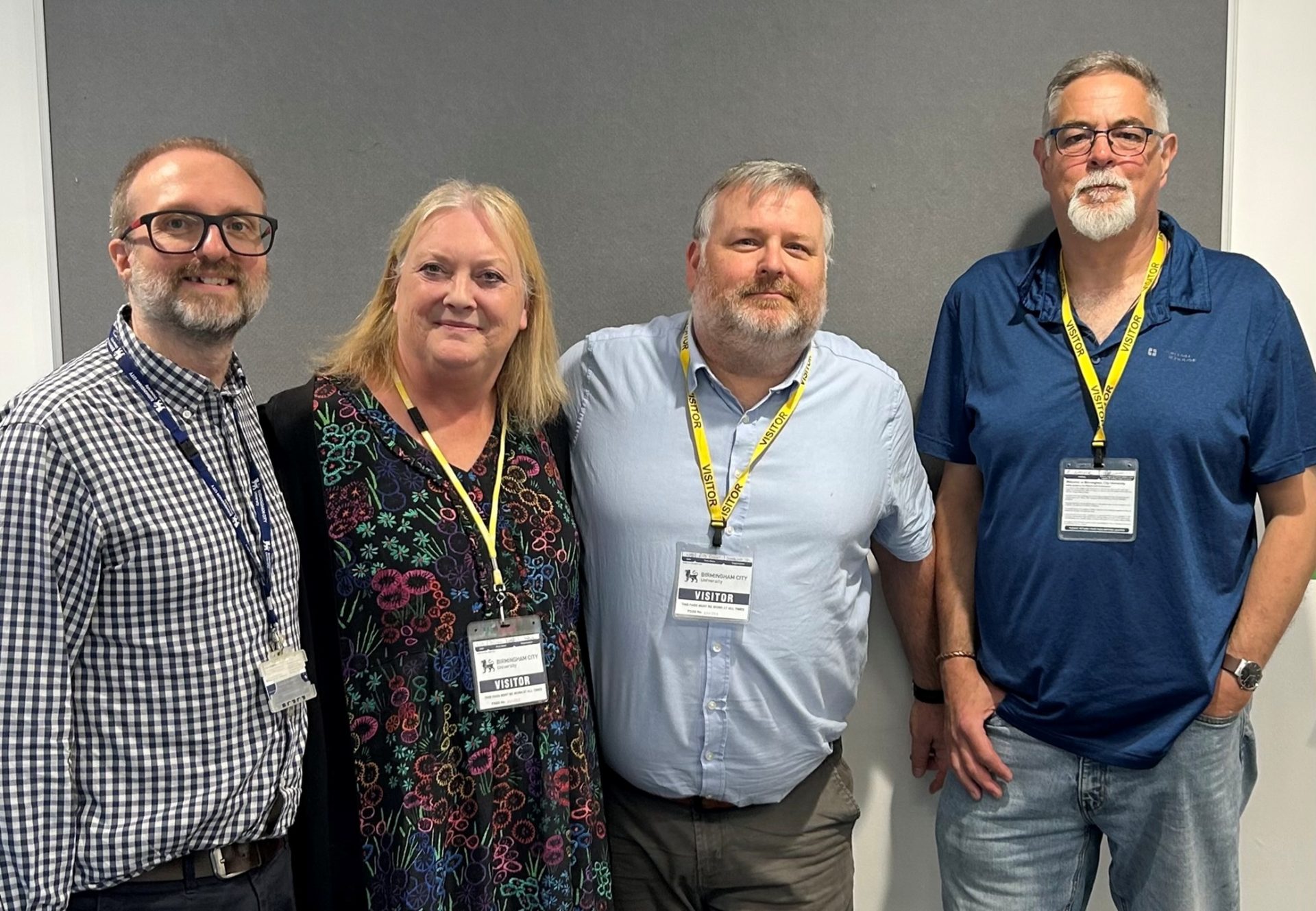
[Image description] four colleagues stand together smiling. From left to right: Peter Simcock (Centre Lead, Deafblind UK Centre for Education and Research, Birmingham City University), Nikki Morris (CEO Deafblind UK), Rod Cullen (see below), Kevin Price (see below).
Our Deputy CEO, Rod Cullen, caught up with with Kevin Prince (Trustee President of the Deafblind Association of New Zealand), about peer support, community leadership, and what international organisations can learn from one another.
Rod Cullen: Kevin, tell us about the Deafblind Association of New Zealand – its mission, its size, and who it supports?
Kevin Prince: Our core mission, and the area we receive most of our funding for, is peer-to-peer support.
At the heart of what we do is bringing people together – quite literally getting Deafblind people into a room so they can talk to other Deafblind people, share experiences, and feel connected. Our slogan is “Be Seen, Be Heard, Be Connected,” and that really captures our purpose. We want people to know that deafblindness exists, to hear the voices of deafblind people, and to connect them with one another.
RC: Do you know how many Deafblind people there are in New Zealand?
KP: Like many countries, we don’t have a clear answer to that. What we do know is that we currently have around 430 people on our database who have been identified as Deafblind, largely through Blind and Low Vision New Zealand, which is the main service provider in the sector.
What’s interesting is that some recent statistical work suggests that deafblindness is likely far more prevalent than official figures suggest. When we talk about who we support, we also think in terms of whānau – a Māori concept that means family, but in a much broader sense, including friends and chosen support networks.
RC: How did you personally become involved with the Association?
KP: I sometimes joke that I was dragged into it. At the time, I was working as an adaptive technology consultant, and I was known as “the technology guy.” Dave Wilson, our founder and first president, approached me and said they needed someone on the board with that knowledge.
I agreed, thinking it would be a short-term role. Ten or eleven years later, I’m still here. That tends to happen when you’re part of something driven by passion and community.
RC: Peer support is clearly central to your work. How does that look in practice?
KP: We run peer support groups in urban centres where there’s a concentration of Deafblind people. That includes places like Auckland, Wellington, Nelson, Dunedin, and Invercargill. Some of those locations are extremely remote, which makes the work both challenging and rewarding.
Our role is to enable these groups, not to control them. We organise transport, venues, and catering, and we try to develop local leaders. What people actually do when they meet is entirely up to them. Most of the time, it involves tea and conversation, but at one conference someone stood up and said, “We want to dance. We want to eat fish and chips on the beach.” Our response was simple: tell us what you want to do, and we’ll help make it happen.
RC: How does lived experience shape your organisation’s direction?
KP: It’s absolutely fundamental. Our constitution requires that at least 50% of our board has lived experience of deafblindness, or of deafness or blindness. That has made us much stronger.
There was a powerful moment when we discussed bringing a Deafblind man onto the board who communicates primarily through tactile sign. Some people worried about how difficult that might be. But a few of us said very clearly: if we can’t support someone like that to be on our board, then we shouldn’t exist as a Deafblind association. That principle – that Deafblind people lead and shape the organisation – underpins everything we do.
RC: You recently visited Deafblind UK, including Rainbow Court and Birmingham City University. What stood out to you?
KP: Rainbow Court really struck me as a genuine community. It felt like people’s home, not a service being done to them. Residents were welcoming, challenging, and engaged – it was very much about Deafblind people first, with professionals there to support that.
At Birmingham City University, what impressed me was the recognition of deafblindness as a distinct impairment. That’s something we don’t yet have in New Zealand, and it was inspiring to see the growing voice and academic recognition you’re developing in the UK.
RC: Māori culture seems to play an important role in New Zealand. How does that influence your work?
KP: The Māori worldview is much more holistic than a traditional Western approach. While the Deafblind person remains central, there’s also recognition of the wider whānau and community around them. Supporting that network is seen as part of supporting the individual.
That perspective has influenced how we think about information, services, and even how we define deafblindness. Any definition we develop has to reflect both Māori and non-Māori worldviews, otherwise it simply won’t be a true New Zealand definition.
RC: Finally, what can Deafblind UK and the Deafblind Association of New Zealand learn from each other?
KP: I think we’re trying to achieve very similar things.
What I’ve really taken from Deafblind UK is your emphasis on connection. Not everyone can attend face-to-face groups, but not everyone can attend online ones either. What matters is offering alternatives, so people have at least one way to feel connected. That, for me, is what this work is all about.
Let’s keep in touch!
Join our mailing list and we will keep you up to date about our projects and opportunities to get involved with Deafblind UK.
More Articles
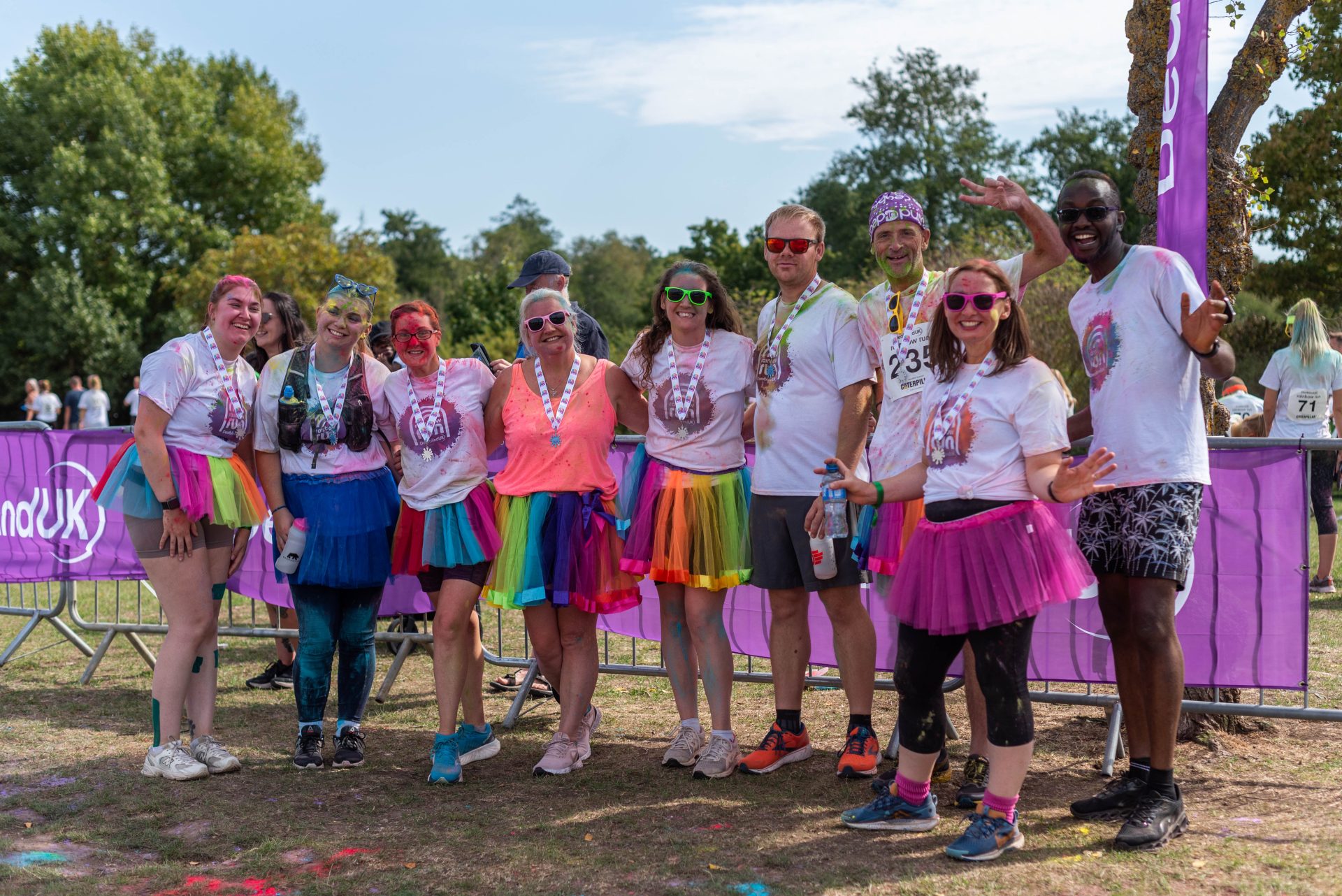
Deafblind UK Rainbow Run announces local charity partners
This year, Deafblind UK is delighted to welcome three fantastic Peterborough-based charities to the Rainbow Run 2026! We are so pleased to…

“I want to do my job well”: being a deafblind receptionist in a digital workplace
In the world of work, having a disability can sometimes feel isolating. There may be moments when you feel overlooked, misunderstood or…

Helping shape the future of PIP, deafblind voices at the heart of change
The people who rely on Personal Independence Payment (PIP) every day are the people best placed to help improve it….